Irish Citizenship by Descent: Who is Eligible to Apply?
Eligibility depends on your specific situation, and Ireland’s Department of Foreign Affairs makes the final decision on every application. This article provides general educational information and is not legal advice.
Family History Questionnaire
Curious what your family history could mean for Irish citizenship?
Answer a few quick questions and learn more about eligibility.
Some readers are new to Irish history and geography, so we define these terms upfront for clarity. If you already know this information, you can jump to the next section below.
Ireland: In this article, “Ireland” means the country that issues Irish passports and is a member state of the European Union. Ireland is often referred to as “the Republic of Ireland”.
Foreign Birth Registration (FBR): Foreign Birth Registration is the process of applying to be entered onto Ireland’s Foreign Births Register. If your application is approved and you are entered onto the Register, you become an Irish citizen and may then apply for an Irish passport.
Colloquially, the Foreign Birth Registration process can be referred to as “Irish citizenship-by-descent”.
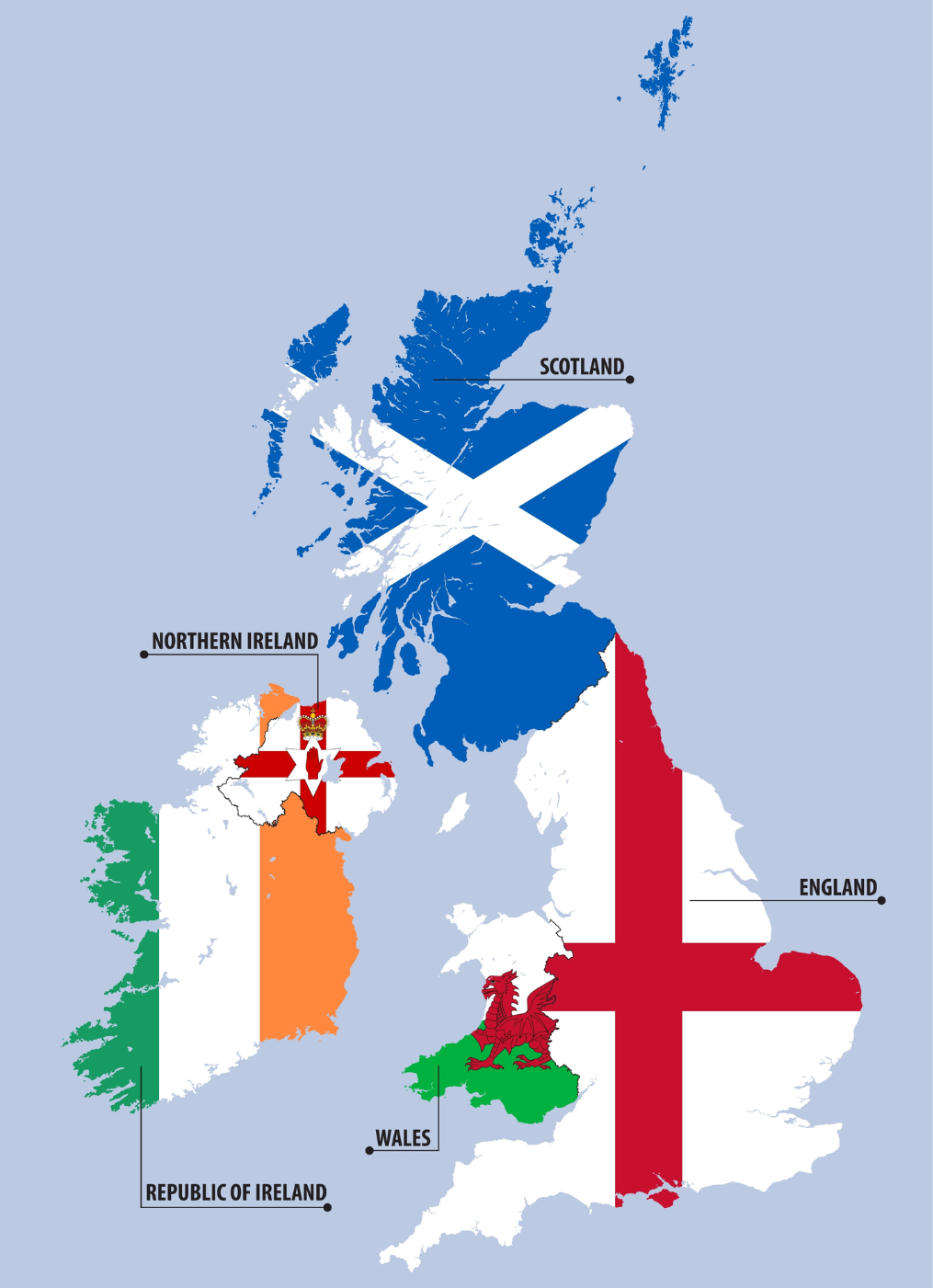
Northern Ireland (part of the United Kingdom): The terms “Ireland” and “the island of Ireland” are sometimes used differently in everyday conversation, so it helps to be precise.
The Republic of Ireland covers most of the island and has 26 counties.
Northern Ireland is in the northeast of the island. It is part of the United Kingdom, along with England, Scotland, and Wales. Northern Ireland has six counties: Antrim, Armagh, Down, Fermanagh, Derry, and Tyrone.
When evaluating Foreign Birth Registration eligibility, the key question is whether the relevant birth took place anywhere on the island of Ireland. This distinction is a common source of confusion.
A Gateway to Europe
Many Irish Americans don’t realize that, under current Irish law, a person born outside the island of Ireland who has at least one grandparent born on the island of Ireland can become an Irish citizen through a process called Foreign Birth Registration.
On our website and in our educational materials, including this article, “grandparent” means your parent’s parent, not a great-grandparent.
Both the United States and Ireland permit dual citizenship, meaning an individual may hold both U.S. and Irish citizenship.¹
Furthermore, an American who becomes a dual citizen of the Republic of Ireland is also a European Union (EU) citizen. Under current EU rules, that status includes rights to live, work, and study in other member countries.
Let’s be clear about what this means: the European Union is a political and economic union of 27 European countries that share common rules and a single market. Irish citizenship is EU citizenship, with rights under EU law to live, work, and study throughout the European Union.²
Practical Benefits Without Moving
You don’t have to relocate permanently to see the value. Irish citizenship gives you the option to live, work, and study across the EU, if you ever choose to.
But it also makes shorter term stays more flexible, as most Americans are limited to 90 days in any 180-day period.³
It can also make travel simpler in small ways, like passport control. Have you ever been stuck in a long line after landing?
With an Irish passport, you may be able to use the EU/EEA lanes where they are available, and those lines can be shorter.
Looking beyond Europe, if you become an Irish citizen, you have the right to an Irish passport, which is widely viewed as a strong passport for international travel.
A special benefit of Irish citizenship is the right to live and work in the United Kingdom without a visa under the Common Travel Area (CTA).⁴ Following the UK’s departure from the EU, this right is not automatically available to citizens of other EU countries.
And here is another key detail to point out: Many people mistakenly assume that having a grandparent born in what is now Northern Ireland disqualifies them from this citizenship pathway.
The truth is, for citizenship-by-descent eligibility, the Irish government treats a grandparent born in what is now Northern Ireland exactly the same as a grandparent born anywhere else on the island of Ireland.
Even if you feel certain right now that you have no interest in living in Europe or traveling there often, life and priorities change. Securing Irish citizenship means that if that day ever comes, the choice is already yours.
And even if you never use those practical advantages, becoming an Irish citizen can be a powerful way to honor your heritage and reconnect with your family’s Irish story.
For many people, the process becomes a meaningful experience and can be genuinely fun along the way.
Quick check: Do you need Foreign Birth Registration at all?
If one of your parents was an Irish citizen at the time of your birth and was born on the island of Ireland, you are automatically considered an Irish citizen, even if you have never applied for an Irish passport. In that situation, you do not need to pursue Foreign Birth Registration.
The Department of Foreign Affairs states: “You are automatically an Irish citizen if one of your parents was an Irish citizen at the time of your birth, and was born on the island of Ireland.”
In contrast, Irish By Descent’s online course was designed to help Americans who have a grandparent born on the island of Ireland pursue citizenship through the Foreign Birth Registration.
Let’s now walk through how grandparent-based eligibility works.
FBR Eligibility: A grandparent born on the island of Ireland
If at least one of your grandparents was born on the island of Ireland, and you were born outside the island of Ireland, you can apply to be entered on the Foreign Births Register.
You only need one qualifying grandparent for this pathway. Your other grandparents’ birthplaces do not affect this eligibility test.
If your closest Irish-born ancestor is a great-grandparent
This article focuses on the most straightforward Foreign Birth Registration scenario, which is having an Irish-born grandparent. Irish By Descent’s course was designed for Americans in that situation.
In more limited cases, Foreign Birth Registration may also be possible through a great-grandparent, but that pathway is more restricted and can involve additional requirements.
Foreign Birth Registration and future children
If you obtain Irish citizenship through Foreign Birth Registration, timing can affect whether that same family line can be used for a future child. This applies if your child will be born outside the island of Ireland:
If you are entered on the Foreign Births Register before your child is born, your child is eligible to apply for entry on the Foreign Births Register through you.
If you are not yet entered on the Foreign Births Register when your child is born, your child will not be eligible to apply for Foreign Birth Registration through you because you were not an Irish citizen at the time of birth.
Foreign Birth Registration applications are processed in strict date order. Processing is currently estimated at approximately 12 months for complete and accurate applications.⁵
However, the Irish Department of Foreign Affairs does state that if you are expecting a child that may be born before your application is processed, you may contact their office. Module 5 of our course provides additional guidance on this situation.
How We Can Help
If you have an Irish-born grandparent and you want to pursue Irish citizenship, Irish By Descent’s self-paced online course gives you a clear roadmap from start to finish.
It walks you through confirming the family details you need (your “Key Family Facts”), locating the required records, and preparing a complete Foreign Birth Registration application with confidence.
Many applicants consider hiring expensive application support services, and fees can reach several thousand dollars depending on the firm and scope. Our self-paced online course is built for people who want to complete Foreign Birth Registration themselves with a clear roadmap, practical steps, and ready-to-use templates. Use our course to stay organized, avoid common mistakes, and keep your family’s vital records in your own hands. You can move at your own pace, on your own schedule, and submit your application directly to Ireland’s Department of Foreign Affairs.
We also have a Free Irish By Descent Handbook that you can download here. This comprehensive resource is designed to help you better understand how Irish citizenship by descent works, what the process involves, and what it could mean for you.
Additionally, if you would like to stay connected with us, join our email list for occasional updates, helpful information, and stories about Irish culture, family history, and citizenship by descent.
Irish By Descent, LLC provides educational content, not legal advice, and is not affiliated with the Government of Ireland.
We strive to keep our informational materials accurate by reviewing publicly available official guidance. However, official instructions can change over time.
If anything in this article differs from official guidance, follow the official guidance, the online application portal, and the instructions on the application form that is generated after submitting your online application.
² EU rights note. Free movement and residence are exercised under EU rules and each country’s national rules and procedures. Requirements and practical details (registration, healthcare access, tuition, and other benefits) vary by country and by personal circumstances. As of Feb 2026.
³ “90 days in any 180-day period” note. This commonly refers to short stays in the Schengen area. Entry rules and permitted stay depend on the destination(s) and the traveler’s circumstances. As of Feb 2026.
⁴ Common Travel Area (CTA) note. Under the CTA, Irish and British citizens can move freely and reside in either jurisdiction and enjoy associated rights and privileges, including the right to work. The practical details are governed by UK and Irish rules and guidance.
⁵ Processing-time note. Official guidance has advised allowing approximately 12 months for processing of Foreign Birth Registration applications (timelines can change and depend on the application being complete and accurate). As of Mar 2026.
This article reflects information available as of February 2026. Facts and figures may change over time.