A spirited Irish song about leaving County Galway, traveling east to Dublin, and setting out across the Irish Sea, “The Rocky Road to Dublin” captures both the energy of a personal adventure and the deeper history of Irish emigration.
“The Rocky Road to Dublin” is an Irish song whose lyrics are commonly attributed to the Irish poet D. K. Gavan. It tells the story of a young man leaving County Galway, traveling toward Dublin, and then crossing the Irish Sea to Liverpool in search of opportunity. The song is lively and spirited, but it also reflects a much larger story of Irish emigration.
More than 160 years later, it still resonates. For many Irish Americans, the journey described in the song may echo stories found in their own family history: the road to Dublin, then to the port of Liverpool, and onward to the United States.
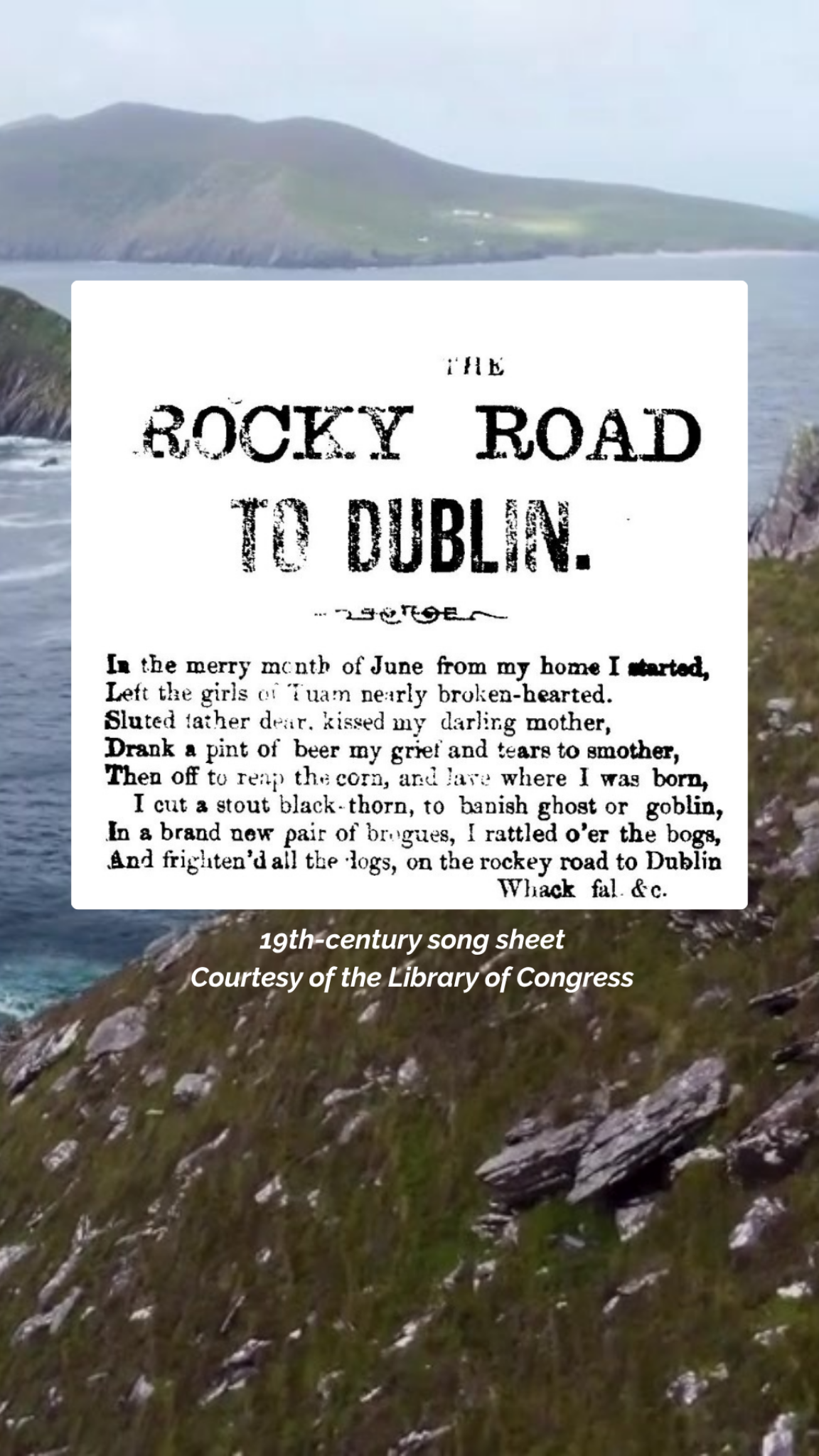
Sheet music courtesy of the Library of Congress
The journey begins in Tuam, a town in County Galway in the west of Ireland. From there, the narrator sets out on foot, carrying himself with confidence and energy as he heads east toward Dublin.
Some of the song’s details are especially tied to Irish life and language. The narrator mentions a blackthorn, a native Irish shrub or small tree known for its hard, dark wood. Blackthorn sticks were often used as walking sticks, and they are also associated with the traditional Irish shillelagh.
Sheet music courtesy of the Library of Congress
"I cut a stout blackthorn, to banish ghost or goblin"
The photograph above shows a blackthorn bush in blossom. Blackthorn is native to both Ireland and Britain. Image: University of Edinburgh, via Europeana.eu.
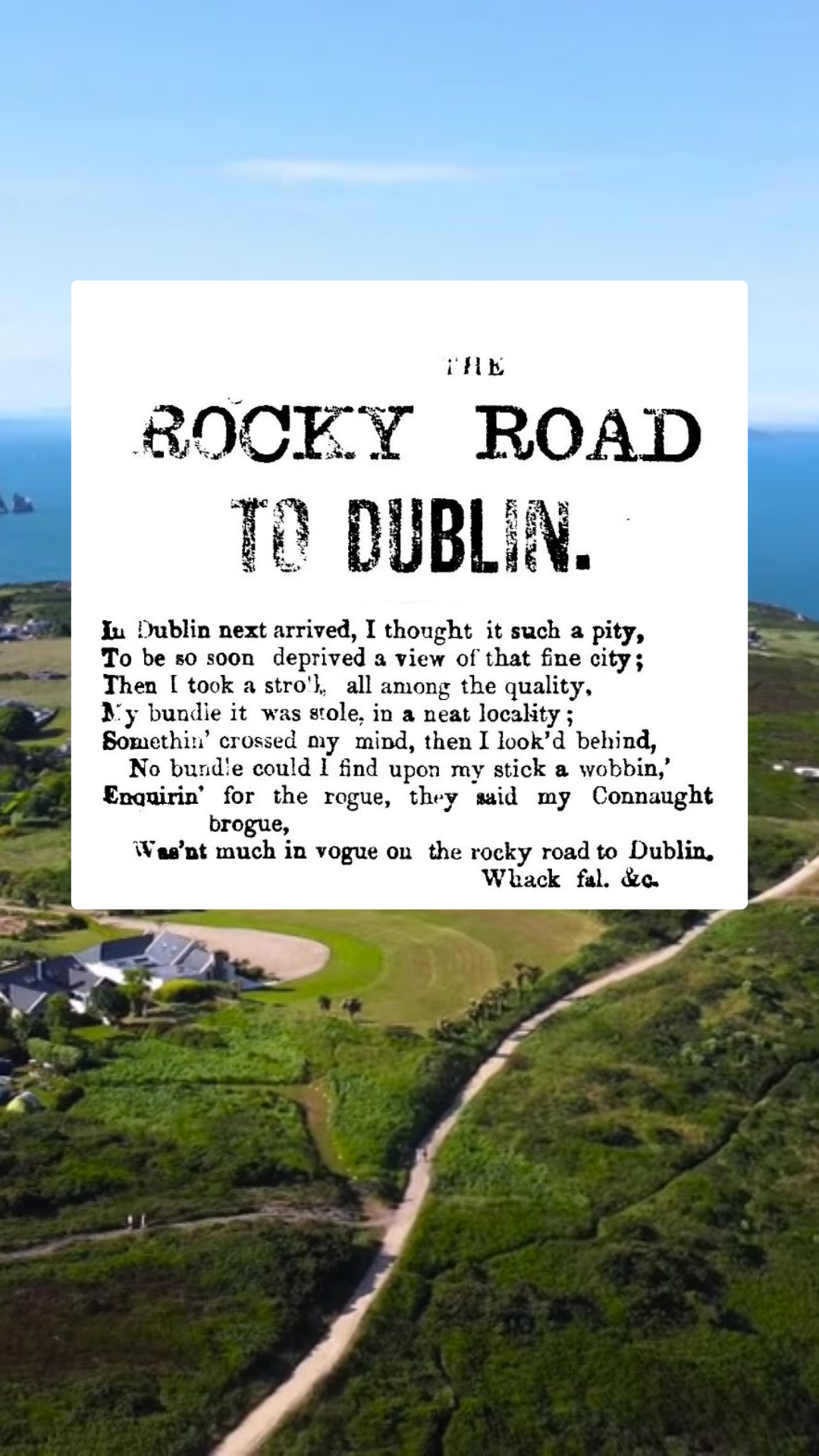
The song also refers to the narrator’s “Connaught brogue.” Connaught, more commonly spelled Connacht today, is the province in the west of Ireland that includes County Galway. A “brogue” means an accent, so the line is pointing to his western Irish way of speaking. When the song suggests that his accent was not “much in vogue,” it reflects how a rural or western Irish accent could make someone stand out as he made his way from the west of Ireland toward Dublin and Liverpool.
Sheet music courtesy of the Library of Congress
Mapping the journey in “The Rocky Road to Dublin”:
From Tuam in County Galway, Connacht, to Dublin, then across the Irish Sea off Holyhead and onward to Liverpool.
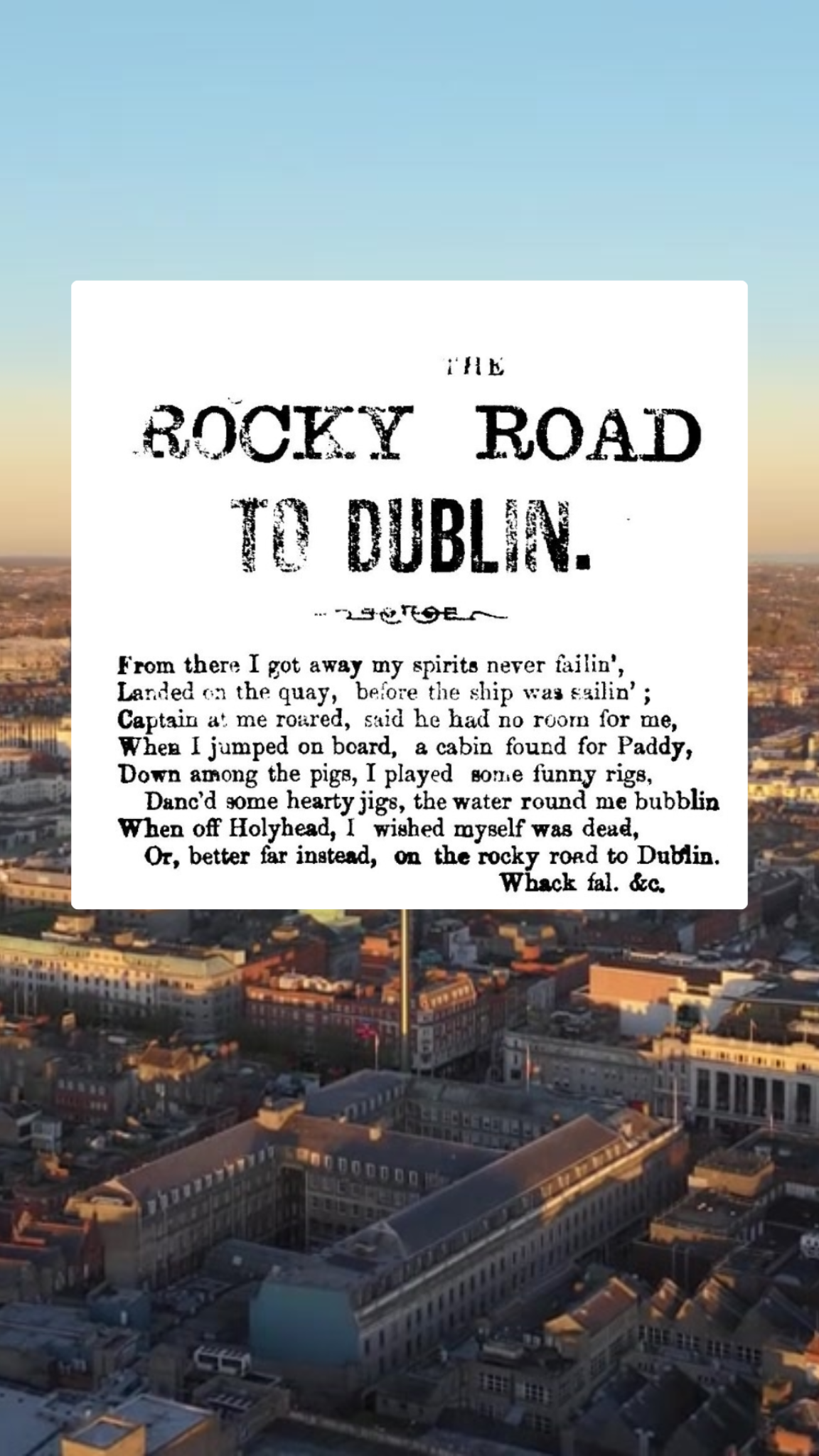
The narrator boards a ship bound for Britain, and the lyric refers to being “off Holyhead,” a port town on the island of Anglesey in north Wales. In this context, Holyhead works less like a full stop in the story and more like a geographic marker: the traveler is out on the Irish Sea near the Welsh coast, on the route toward Liverpool.
Sheet music courtesy of the Library of Congress
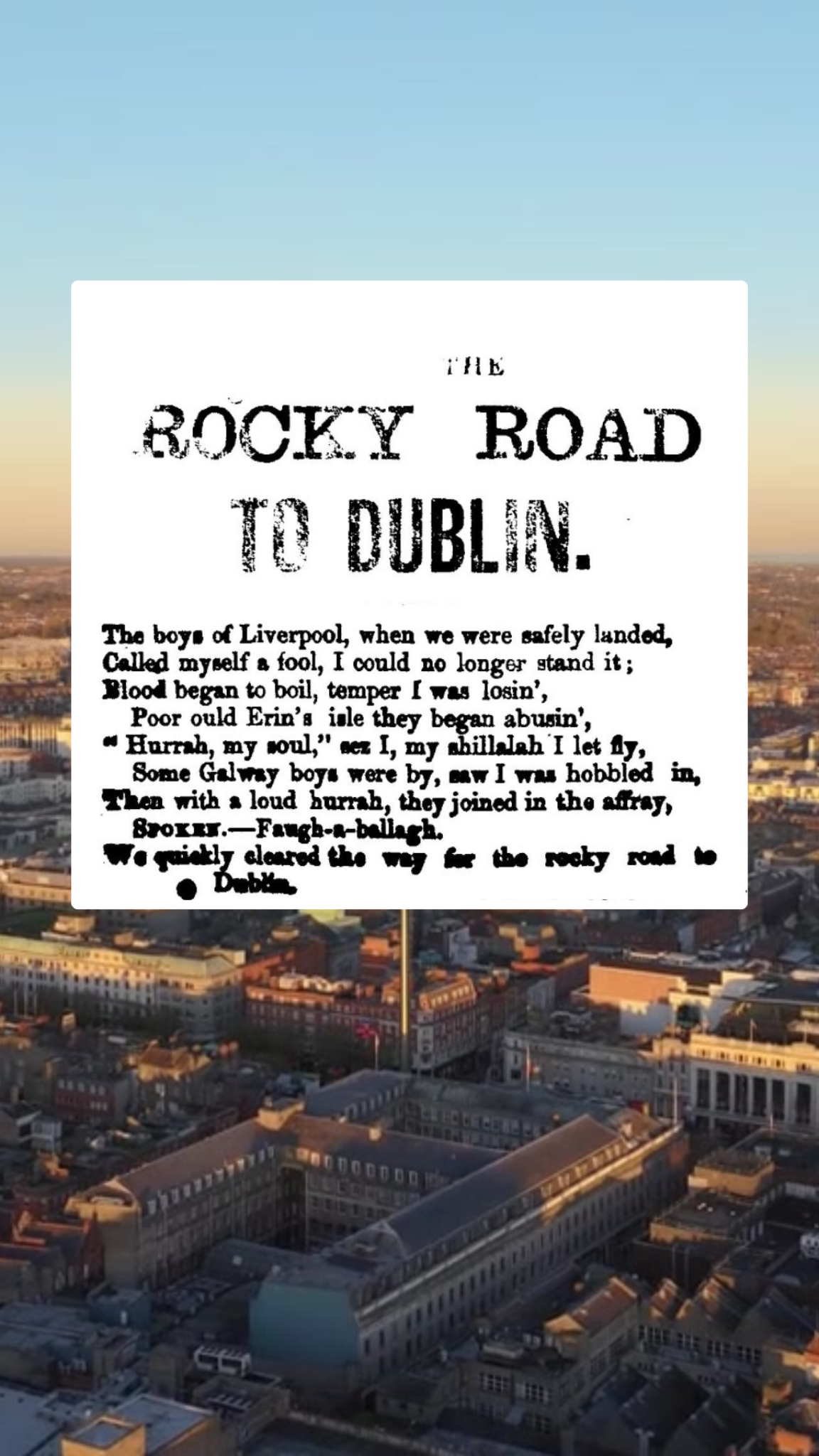
When the narrator reaches Liverpool, the song turns from travel to confrontation. After the “boys of Liverpool” begin insulting Erin’s Isle, the scene quickly escalates. The lyric then brings in “some Galway boys,” who come to the narrator’s aid and turn the scene in his favor. With the Galway boys joining in, the moment becomes a brief flash of Irish pride abroad: the narrator is far from home, proud of where he comes from, and unwilling to let Ireland be ridiculed in an unfamiliar English port city.
Sheet music image courtesy of the Library of Congress
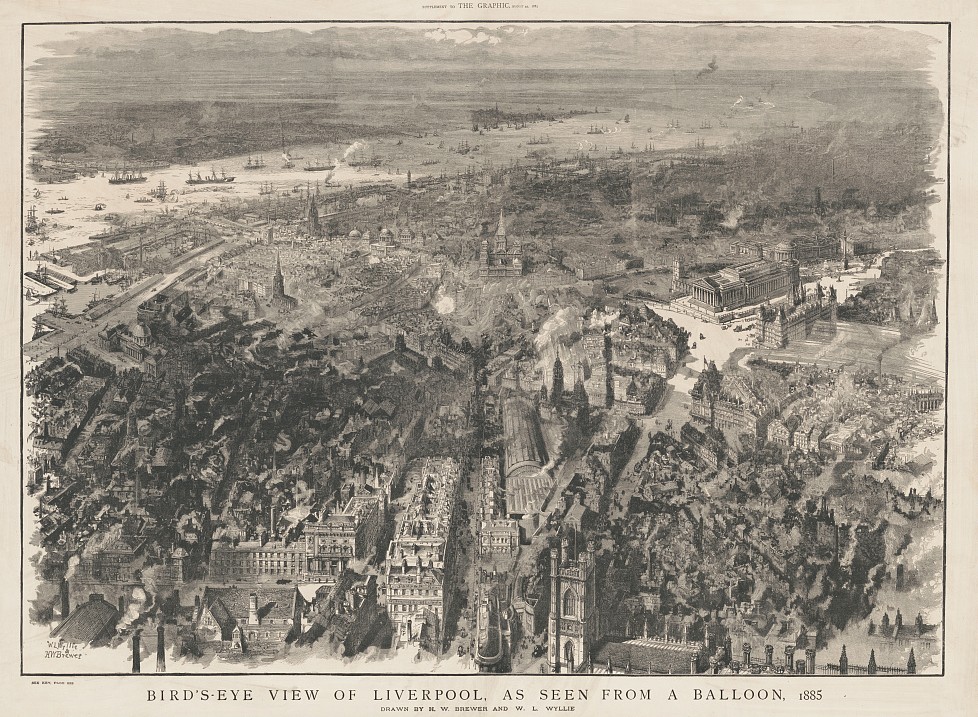
Liverpool was not just a destination in the song. In the 19th century, it was also part of a longer journey taken by many Irish emigrants. After the 1830s, as passage from England to the United States became less expensive, many Irish travelers crossed first to Liverpool before sailing onward to cities such as New York, Philadelphia, and Boston. For those waiting to depart, the city could be a difficult and uncertain place. Before they ever boarded a ship bound for North America, emigrants might encounter crowded lodging, disease, fraud, overcharging, and other forms of exploitation.
Behind its quick rhythm and vivid storytelling, “The Rocky Road to Dublin” offers a small window into the journeys, hardships, humor, and pride historically carried by many Irish emigrants abroad.
“Bird’s eye view of Liverpool, as seen from a balloon, 1885.” Courtesy of the Library of Congress.